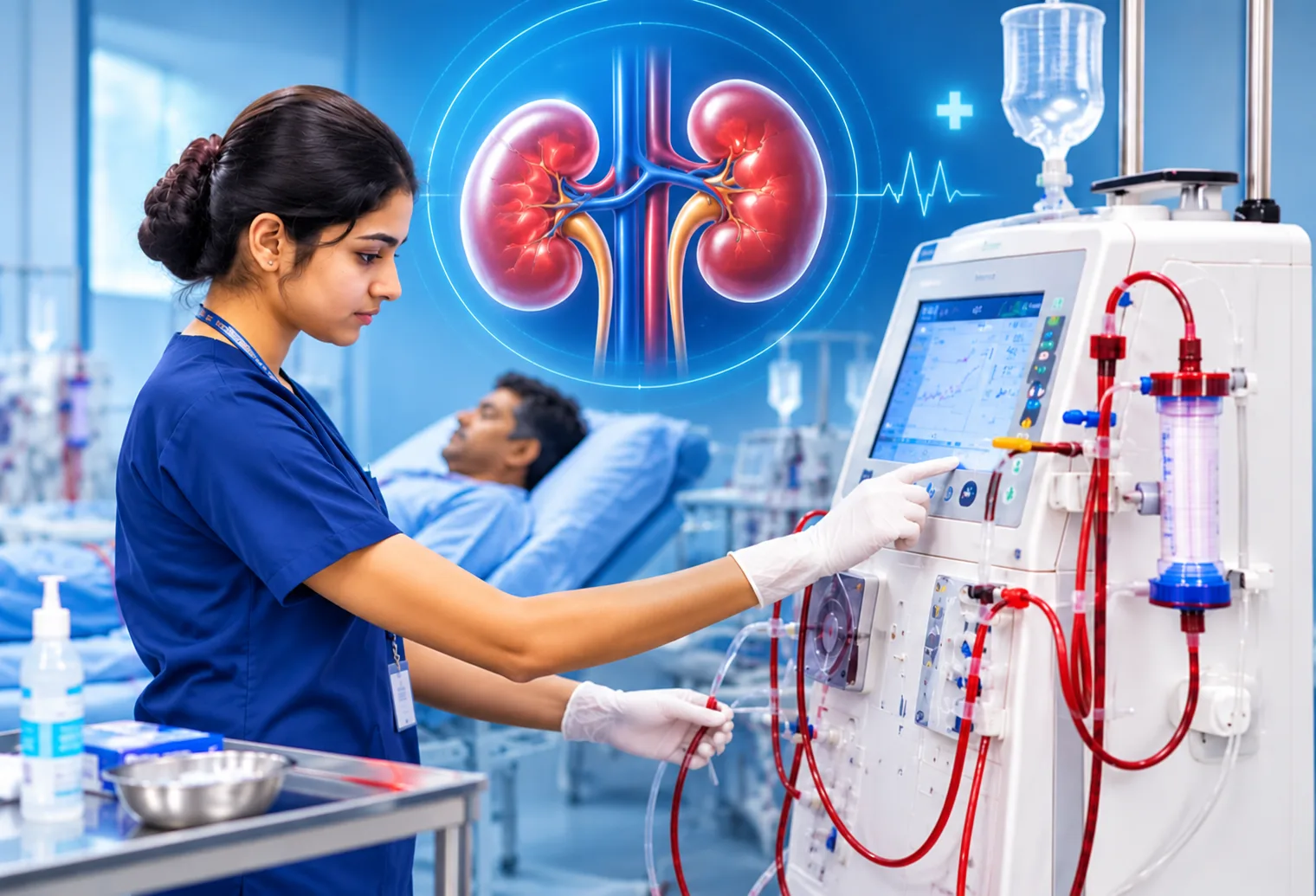
Dialysis technology is one of those careers where you get your hands dirty early. A dialysis technology course prepares you for that work. Some people’s kidneys can no longer clean their blood, and dialysis keeps them alive. Someone has to set up each session, watch the machine and notice when something is wrong. That someone is a dialysis technician, and hospitals and dialysis centres need more of them. So what does the training actually involve? Let’s go through it.
Why dialysis needs skilled staff
When the kidneys stop working properly, waste and extra fluid build up in the blood. The Cleveland Clinic’s overview of dialysis explains that dialysis filters them out and keeps people with kidney failure alive. It won’t cure the condition. Many patients need it for years, and some need it for life.
Most people on dialysis have hemodialysis. The Cleveland Clinic’s hemodialysis guide says about 90% of dialysis patients use it. The machine takes blood out of the body, runs it through an artificial kidney called a dialyser, and sends it back clean. Patients need this so often that every session depends on a careful setup, close watching and accurate notes.
What the course covers
The course isn’t just about the machine. It starts with how the kidneys work, then moves on to how haemodialysis and peritoneal dialysis are done. You’ll learn to run and maintain dialysis machines, keep track of patients during treatment and deal with problems as they come up. Patient safety, infection control and emergency response are covered as well, along with the rules and ethics of dialysis care.
All of these pieces connect. The machine, the patient and the care team depend on each other. A technician who understands all three is much more useful on a ward than one who only knows which buttons to press.
Classroom and practical work
In class, you find out why a machine is set up a certain way and what each setting does. In practical sessions, you handle the equipment, check settings against a prescription and follow a treatment from beginning to end.
You also get a course manual, study guides, online resources, video demonstrations and case studies from real clinical situations. These help you connect what you read with what happens at the bedside.
Hospital training
The course includes months of practical training at hospitals in Kerala. The academy says it works with well-known hospitals, where students use modern dialysis machines and learn from experienced doctors and nurses. For many students, this placement is what makes the difference when they start job hunting.
Before you enrol, ask which hospitals take students, how long the placement lasts and what happens if a place isn’t available. The answers will tell you a lot about how the training works day to day.
Who the course suits
This course suits people who want a clinical career and don’t mind detailed, repetitive work. You’ll usually need a high school diploma or equivalent, a basic grasp of biology and anatomy, good communication skills and a willingness to work in a clinical setting.
Dialysis work runs on a fixed timetable, so it suits people who are calm, careful and reliable. If you’d rather spend more time talking with patients over the long term, a nursing pathway might suit you better. Our article on 10 questions to ask before joining a paramedical institute in Calicut covers what to check before enrolling in any paramedical course, and those questions apply here too.
Certificates and career options
Students who finish the course receive academic certificates and hospital training certificates. Together, they show employers what you studied and where you practised. That can make a real difference when you’re applying for your first job.
Graduates can work as dialysis technicians, hemodialysis technologists, renal dialysis assistants, dialysis machine operators or patient care coordinators in dialysis centres. The Cleveland Clinic’s dialysis page notes that a typical haemodialysis session lasts about four hours and is usually done three times a week. Patients plan their lives around that schedule, so units need staff who can keep it running smoothly.
How many jobs there are depends on where you live, so take a look at the dialysis units near you. If you’re also comparing hospital roles, our article on what makes a successful cardiac care technician covers another technical role in patient care.
Questions to ask before you enrol
- How long is the course, and how is the time split between classroom work and hospital training?
- Which hospitals offer placements, and how are students assigned to them?
- What does the fee cover, and are placements or certificates charged separately?
- What support does the academy give graduates when they look for work?
How to enrol
For full course details and admission steps, visit the dialysis technology course page. If you’re still comparing options, you can browse the academy’s paramedical courses in Calicut. To ask about admission, email info@malabaracademy.in or send a message through the contact page.